
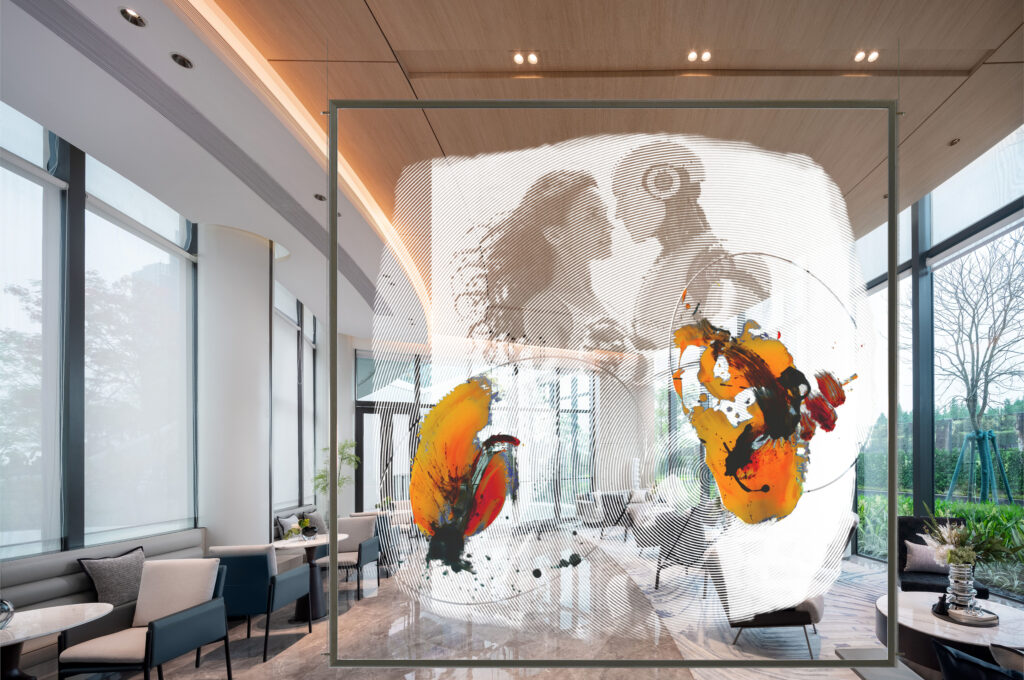
From a stained-glass window to a transparent image
On the liberation of a material, the freedom of the artistic process, and a different conception of the image
by Nabo Gass
The history of stained glass does not begin with an image. It begins with an opening.
A wall supports, separates the inside from the outside, protects and defines boundaries. Where it is opened up, the room loses some of its enclosed nature and gains light. The window resolves this contradiction by closing the opening without sealing it off completely. Glass has therefore always been a material of the in-between. It separates and connects; it is both a boundary and a passage; it has a surface, whilst at the same time revealing that another reality exists beyond that surface.
When people began to colour glass, to paint on it, to divide it using lead came and to assemble images from individual pieces of glass, an art form emerged which, to this day, differs fundamentally from almost all other forms of imagery: whilst a painting receives light so that we can see what is painted on it, the stained-glass window allows light to pass through it, alters it and transmits it into the room. Its colour is not confined to the boundaries of the image. As a colour carried by the light, it may appear on a wall, a pillar or continue across the floor, thereby encompassing a space that extends far beyond the physical surface of the window.
In medieval church windows, this distinctive materiality was combined with a religious purpose. The windows told stories, depicted saints, prophets and biblical events, and formed part of an architectural and theological order. His iconography was inextricably linked to an effect that required no narrative, an effect that arose from the material and the light itself: natural light was transformed by the glass and carried into the interior as a coloured phenomenon. The window was thus not merely a medium for images, but an instrument of transformation. The image extended beyond its physical boundaries and altered the perception of the entire interior space.
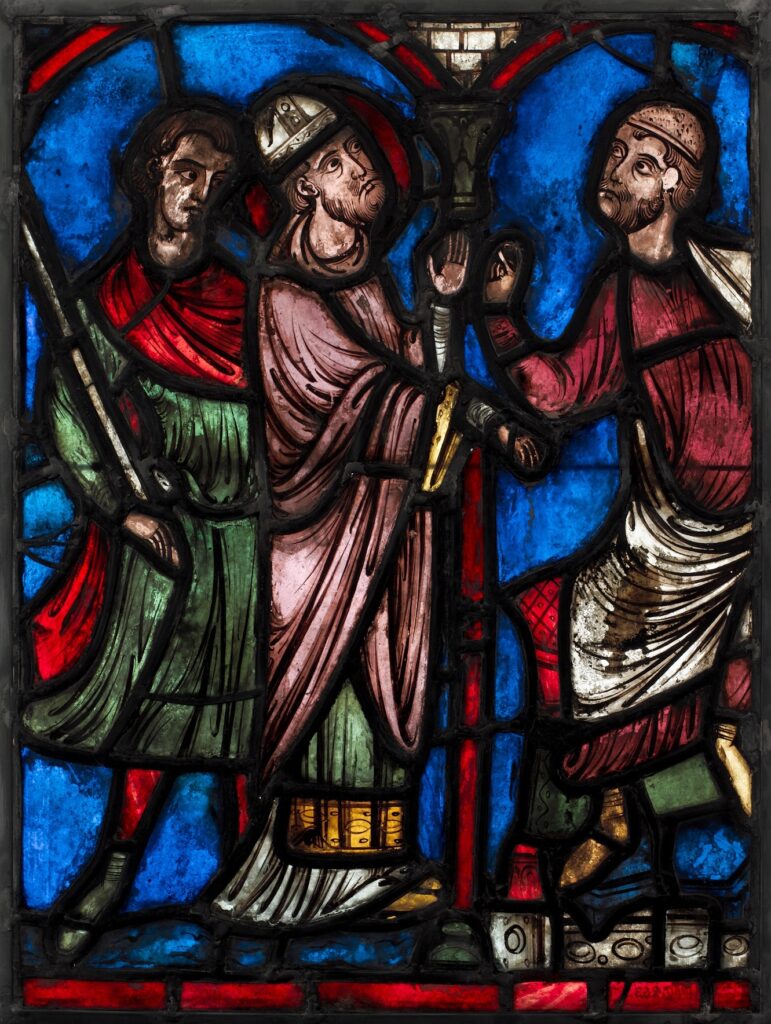
For many centuries, therefore, the church window was the place where glass, as a material, could realise its unique artistic potential: transparency, the transmission of light, the interplay of colours, and the interconnection of image and space.
Over time, however, perceptions of these qualities changed: what had initially been taken for granted as an intrinsic part of the church window’s nature increasingly became a subject of artistic exploration in its own right.
This development, and the question of how artists perceived the properties of glass and what degree of freedom they allowed themselves in working with it, will be the subject of the following discussion.
Two dreams of a large glass surface
The history of stained glass is inextricably linked to the history of architecture. For a long time, the window was an opening in a solid, predominantly load-bearing wall, and its dimensions were limited by the structure and materials used. The Gothic period represents a spectacular historical exception to this. It achieved grandeur through its structural organisation: skeleton construction, tracery and buttresses made possible window areas of a size that had previously been almost unimaginable. However, these monumental surfaces could not be filled with homogeneous panes. Stone mullions, tracery and reinforcements divided them into sections, within which lead came was used to join numerous individual pieces of glass together. The technical necessity of this division was not concealed; it became a design principle.
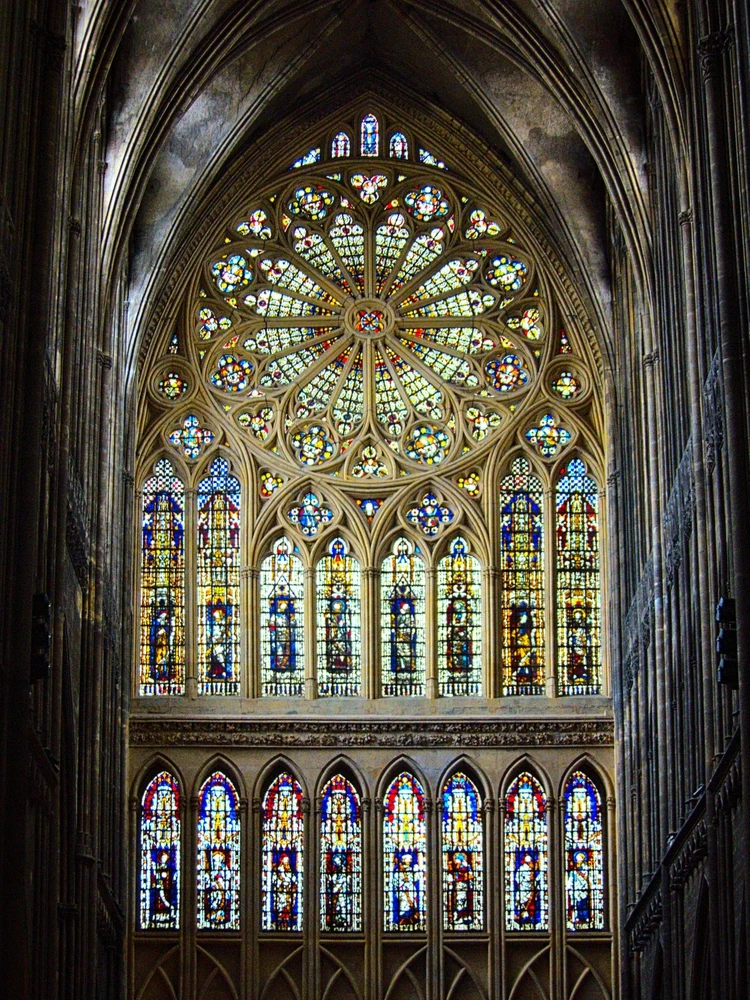
Saint-Étienne Cathedral in Metz
Centuries later, modern architecture once again embraced large glass surfaces, though this time under completely different circumstances. Steel and reinforced concrete frameworks, new façade designs and, finally, industrial methods of flat glass production made it possible to increasingly free the external wall from its load-bearing function. The window evolved into a continuous band of windows, floor-to-ceiling glazing and, ultimately, a curtain wall.
The German Museum of Stained Glass explicitly describes the ever-increasing size of glass surfaces as one of the new challenges facing glass design in the 20th century.
In this respect, Gothic and Modernist architecture converge in a remarkable way: both dreamt of large glass surfaces. Yet whilst the Gothic style achieved this scale through structural division, Modernism increasingly gained the ability to dispense with such division.
This must not lead to the claim that modern architecture fundamentally rejected all forms of division or ornamentation. It is far too diverse for that. However, significant movements within modernism sought clarity, minimalism and large, continuous surfaces.
For traditional stained glass art, this reversed a centuries-old convention. Previously, the stained-glass artist had to divide the glass to achieve scale. Now, the large surface area could be preserved, and each division increasingly became a deliberate design choice.
Consequently, the lead came also found itself in a new situation. For centuries, it had fulfilled two inseparably linked functions: it held the individual pieces of glass together whilst simultaneously forming the image. Its technical necessity lent it an artistic naturalness. With the availability of large panes, this necessity was no longer required. The lead came by no means lost its aesthetic power, but its status changed. A necessary line became a possible line.
And this raised a question that went far beyond the technical aspects: if the screen no longer needed to be split, why should the image continue to look as though it did?
With glass instead of on glass
Johan Thorn Prikker plays a key role in this. The German Museum of Stained Glass describes his revival of stained glass art at the beginning of the 20th century using a remarkably simple distinction: it describes his artistic approach as painting ‘with glass rather than on glass’ *
This difference goes far beyond a mere technical issue. Anyone who paints on glass can regard the glass as a medium for a pre-conceived visual idea. Anyone who ‘paints’ with glass allows its properties to play a part in the creation of the image. Coloured glass is no longer merely a surface for model-based black-lead painting, but is itself colour. The lead rod is not merely a connector, but a line. Variations in transparency become tonal values; material textures become pictorial events; light is no longer merely a prerequisite for seeing, but an integral part of the composition.
Remarkably, this initial emancipation takes place entirely within the architecture itself. At first, the glass does not emancipate itself from the building, but rather within it. Thorn Prikker does not leave the window. He rediscovers its possibilities.
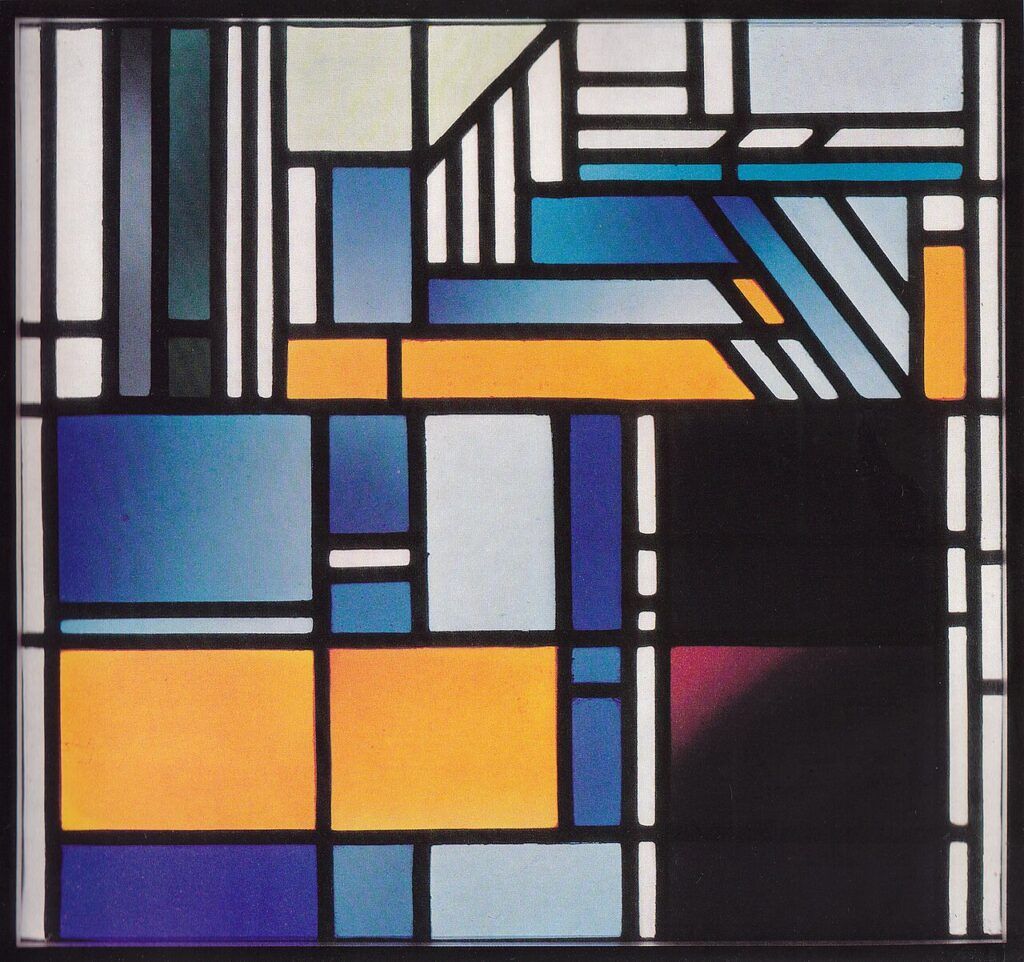
After the Second World War, this debate was carried on by an entire generation. Georg Meistermann, Ludwig Schaffrath, Wilhelm Buschulte, Hubert Spierling, Hans Gottfried von Stockhausen, Johannes Schreiter, Jochem Poensgen and others by no means developed a shared visual language. Yet their works broadened the concept of what stained glass art could be. Abstraction, layering, line, colour, the creation of spatial effects and new technical processes opened up possibilities that went far beyond traditional narrative stained glass.
Stained glass art did not simply become more modern as a result. It began to explore its own terms.
Between the artist and the window
Up to this point, the story can be told in a relatively straightforward manner. It becomes more complicated at the point where the artistically designed window becomes a work of art in its own right: with the creation of what is known as the ‘autonomous glass picture’.
Looking at the independent works of leading post-war stained-glass artists, one might be tempted to think that artists had at some point decided to free the stained-glass picture from its architectural context. The autonomous stained-glass picture would thus have emerged, almost as a matter of course, from the modern church window. The reality was more prosaic – and is perhaps all the more revealing for that:
In the case of major church commissions, there was an intermediary between the artistic design and the finished window that is surprisingly easily overlooked in art-historical analyses: the stained-glass workshop.
The artist convinced the client and the decision-making bodies with his design. Various specialist stained-glass workshops were then considered for the execution of the work. Consequently, these workshops competed with one another on more than just price.
They had to demonstrate how convincingly they were able to translate the design into glass. To this end, test panels were produced. A clearly defined area from the cardboard model in the 1.1 drawing was to be produced as a sample in order to ensure that the quality and differences in the craftsmanship and artistic execution remained comparable. They were therefore not merely miniatures of a future window. It was in these pieces that it first became apparent what happened to a concept developed on paper once it actually became glass: Which pieces of glass were chosen? How did the colour change as light passed through them? How did a drawn line become a lead rod? What kind of painting was required? What remained of the artist’s personal style, what was lost in the process of translation – and what might have been added through the expertise of an outstanding workshop?
Such trial sites were funded by the workshops competing for the contract. Materials and labour costs were part of the business risk. The workshop invested because the trial site held the prospect of a much larger contract.
This is of considerable significance for the story that follows, for once the decision on the commission had been made, a physical object remained whose original function had been fulfilled. It possessed colour, light, faint lines and a defined form. It could be hung up, viewed, kept – and ultimately sold as well.
The test piece could become a picture. Not necessarily because it had changed physically. Its status had changed.
From the trial plot to the test disc
This is where the development of the free glass painting emerges; in art-historical literature, this has evidently been examined less thoroughly than its later aesthetic significance.
A private client did not need to remove an existing window to fit a sample piece with traditional leaded glazing – and with the increasing demands on thermal insulation and insulating glazing, this had become an increasingly unattractive option. A smaller piece of glazing could be fitted much more easily in front of an existing window on the inside. As a curtain window, it was therefore not only attractive but also practical. It was just that ‘Curtain Panel’ wasn’t a particularly promising name for a work of art.
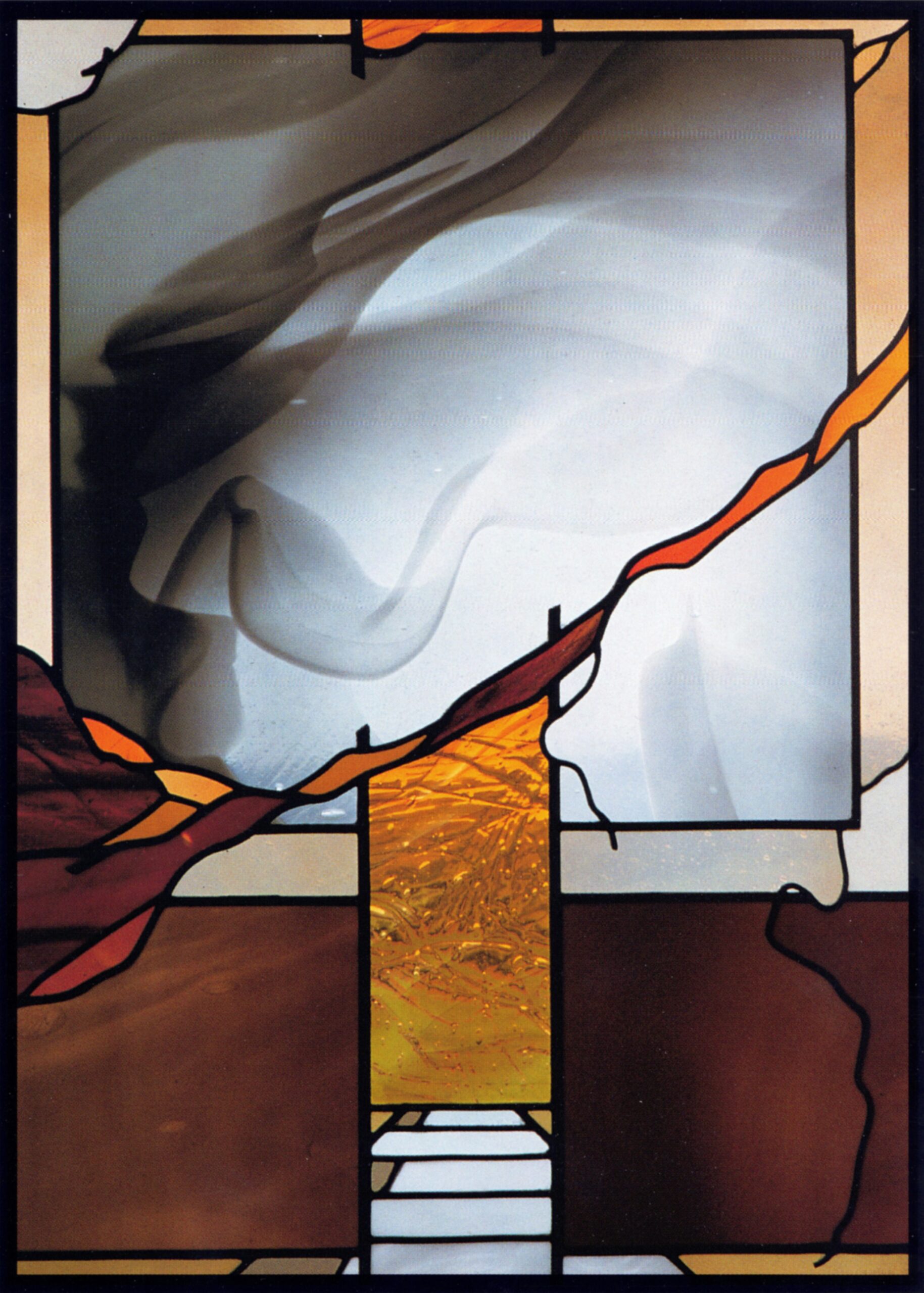
Horst Hähle, a trained stained-glass artist and workshop manager, was part of a world in which the designs of other artists were skilfully translated into glass between 1953 and 1972. At the same time, he worked on pieces independent of architecture, for which he himself coined the illuminating term ‘mobile glass pictures’. In his catalogue Mobile Glasbilder, he explicitly draws a connection between his glass pictures and historical cabinet or hanging panels. In doing so, he reminds us that the idea of a glass artwork suspended in front of the pane has already featured once before in the history of stained glass.
From the late Middle Ages right through to the 18th century, small-scale panes – more or less elaborately painted with black lead and silver yellow and set in lead – adorned guild halls, living quarters and even secular public buildings, featuring coats of arms, images of benefactors, portraits, and depictions of weddings and crafts.
From mobile to autonomous glass displays
‘Mobile’ primarily describes a fact: the image can change its location.
‘Autonomous’, on the other hand, is an interpretation rooted in art theory.
This distinction is more important than it might initially appear. For a glass image can leave its architectural setting without this fundamentally altering the way it is perceived. It can be mobile whilst continuing, in formal terms, to draw on the tradition of the window.
However, spatial independence and artistic emancipation are not one and the same thing.
The autonomous glass picture was therefore perhaps not the result of a single, grand act of liberation. Workshop practice, experimental projects, changes in architecture, building physics, collectors’ interest and marketing all played a part.
It was only once a portable, architecture-independent form of glass art existed that artists were able to begin to explore and develop the freedom it offered, and to harness it for their creative vision.
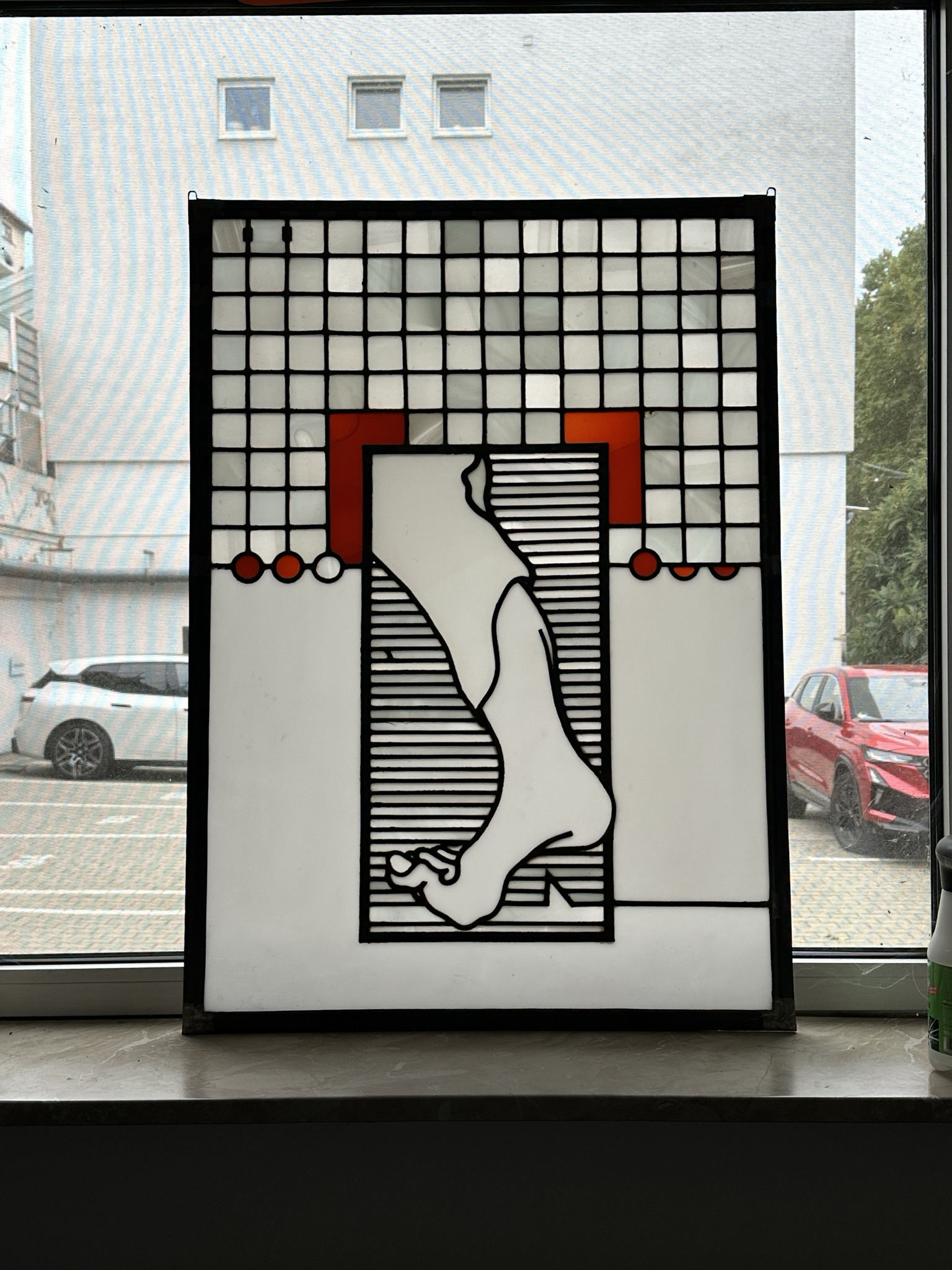
In the work of Hans Gottfried von Stockhausen, one can observe how spatial independence led to a shift in the way images were conceived: in his free-form glass pictures, the unique characteristics of the hand-blown glass – such as its colour gradients – could themselves become the starting point for the composition. The material was no longer merely a means of realising a previously fully defined visual idea; it could itself play a part in the creation of that idea.
Here, mobility truly becomes autonomy. And yet one question remains:
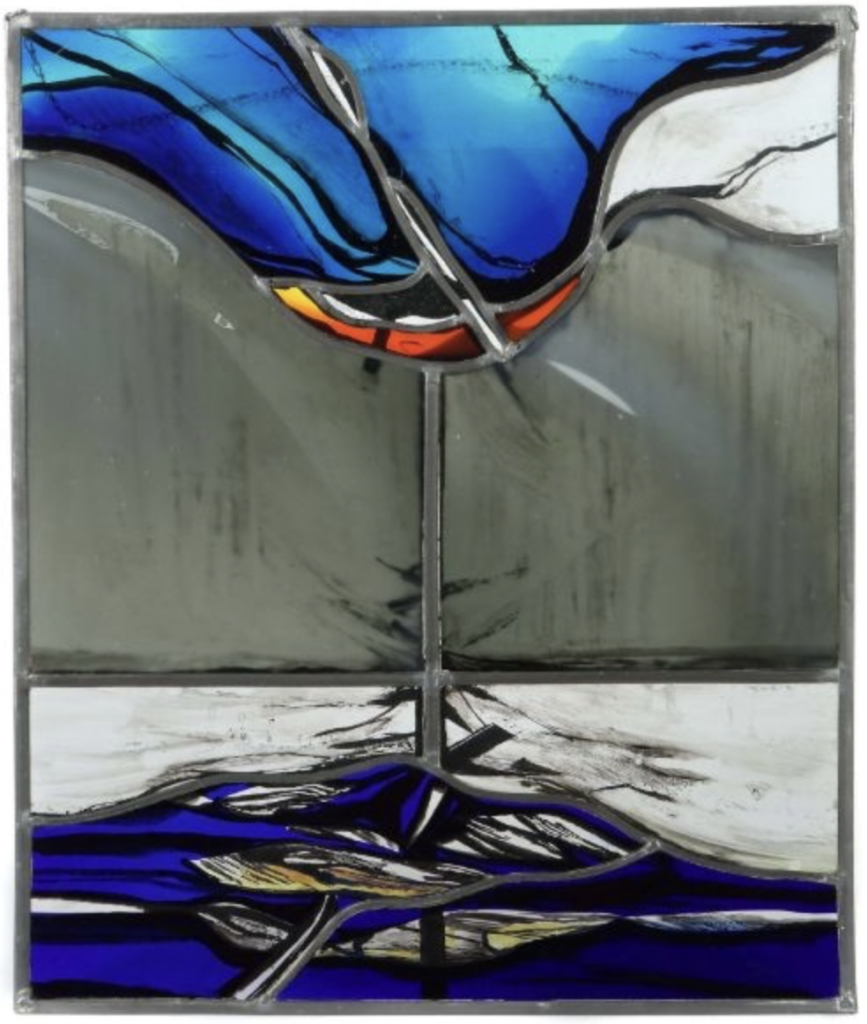
Who pays for this freedom?
The architectural stained-glass window was commissioned by a client. The artist was paid for his design, the workshop for its execution, and the finished window was created for a specific building. Even the test panel could be justified on economic grounds, as the workshop was using it to compete for a larger commission.
The independent glass painting did not possess this structure. Anyone wishing to create a glass painting without a commission, without a specific design and without a buyer already in place still needed glass, a workshop, kilns, machinery, working hours and specialist craftsmanship. However, initially there was no one to cover these costs.
Herein lies a limitation of this supposed autonomy that has often been overlooked until now. The freedom of the glass painting had to be financed.
A painter could start painting on a canvas in his studio, paint over it and then discard it. An artist who had to commission a specialist stained-glass piece for every attempt found himself in a completely different situation. Every attempt meant materials, labour and, consequently, a bill.
The rarity of free-standing glass artworks in the 20th century may therefore be linked to the conditions under which they were produced. For me, however, behind this economic question lies a second, perhaps far more fundamental one. It is the question of how a work of art comes into being in the first place.
Two Worlds
During my apprenticeship as a stained-glass artist at Derix, I learnt the ins and outs of large-scale, highly specialised stained-glass work from the ground up. I learnt about the precision, discipline and experience required to transform an artistic design into a lasting work of art in glass.
The work followed a set of defined steps. The design was traced. Using the blueprint as a guide, stencils were made to create the templates for cutting the glass. The pieces of glass were selected, cut, painted and fired in accordance with these specifications. This was followed by lead-lining using the specified lead profiles, soldering and, finally, grouting the lead joints. Each of these steps required skill. But the aim was clear. An existing design was to be translated into glass with the highest possible standard of craftsmanship and artistic quality.
During this training, Wilhelm Derix took me on trips to visit artists who were working on church projects or had expressed an interest in such commissions. Even today, I still clearly remember the studios I entered back then. What took place there stood in stark contrast to my everyday life in stained-glass work. Here, paint was not applied exclusively in a controlled manner with a brush. It was squirted out of bottles, poured over surfaces, spread with squeegees and mixed with a wide variety of liquids. Bodies could become tools. Photographic and light-sensitive processes opened up new visual possibilities in which the traditional paintbrush played hardly any role at all. Coincidences were not necessarily eliminated. They could be contemplated, accepted and become the starting point for the next decision. What mattered was not so much the individual technique as the freedom from which it sprang. The artist did not yet need to know what the picture would look like in the end.
That was the freedom in front of the canvas that I dreamt of. And at some point it dawned on me that I did not want to trade that freedom for glass.
I wanted to win it over for glass:
The journey towards a free-standing glass artwork
The key aspect of the glass picture’s emancipation does not lie solely in the fact that it can leave its place in the church window. A portable glass picture can be independent of any architectural context and yet be produced under the same conditions as a window: designed here, executed there.
Greater freedom begins where the creative process itself changes. When working with glass comes closer to the working processes that are taken for granted in many areas of the fine arts – where design and execution, imagination and material experience are not strictly separated from one another, and the work emerges in dialogue with its material.
A painter does not need to know exactly what their painting will look like in the end before applying the first brushstroke.
One decision leads to the next. Colour reacts to colour. Something goes wrong and is reworked. Something unexpected happens and alters the entire composition. Thinking and doing can no longer be neatly separated. Why should it be any different with glass?
To this day, the traditional division of labour between the artist and the stained-glass workshop complicates this process. Not because the workshops are any less creative. Their role is simply different. They must ask how an artistic vision can be realised in a way that is technically sound, durable, reproducible and, at the same time, economically viable.
The independent artist, however, is free to ask a different question: What happens if I try something without yet knowing whether it will work? Where the artist and the stained-glass artist are one and the same person, this distinction does not disappear. It is simply embodied in a single person. The stained-glass artist knows the limits. The artist may decide to cross them nonetheless.
An effect need not be foreseen; it can be discovered. An experiment may fail, be altered or discarded. A technique may be developed for a single picture and then never used again.
The physical realisation no longer necessarily follows the artistic decision. It can itself be an artistic decision.
The workshop becomes a studio. The picture is no longer merely executed. It is allowed to come into being there.
Technology follows freedom
This also changes the significance of technical innovation.
If existing techniques do not allow for a certain degree of artistic freedom, the artist can either adapt their vision to the available possibilities – or try to change those possibilities.
I was interested in the second option.
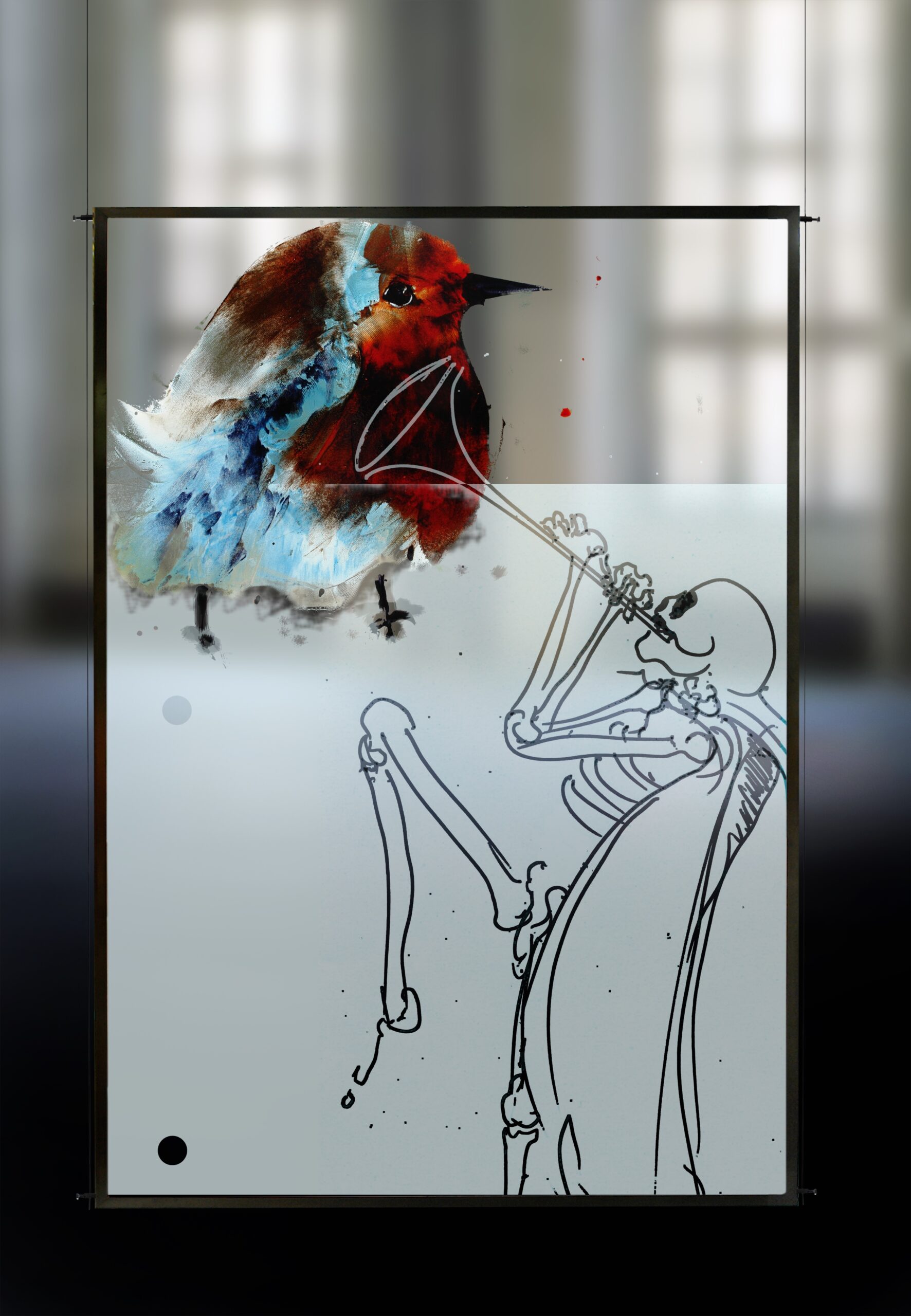
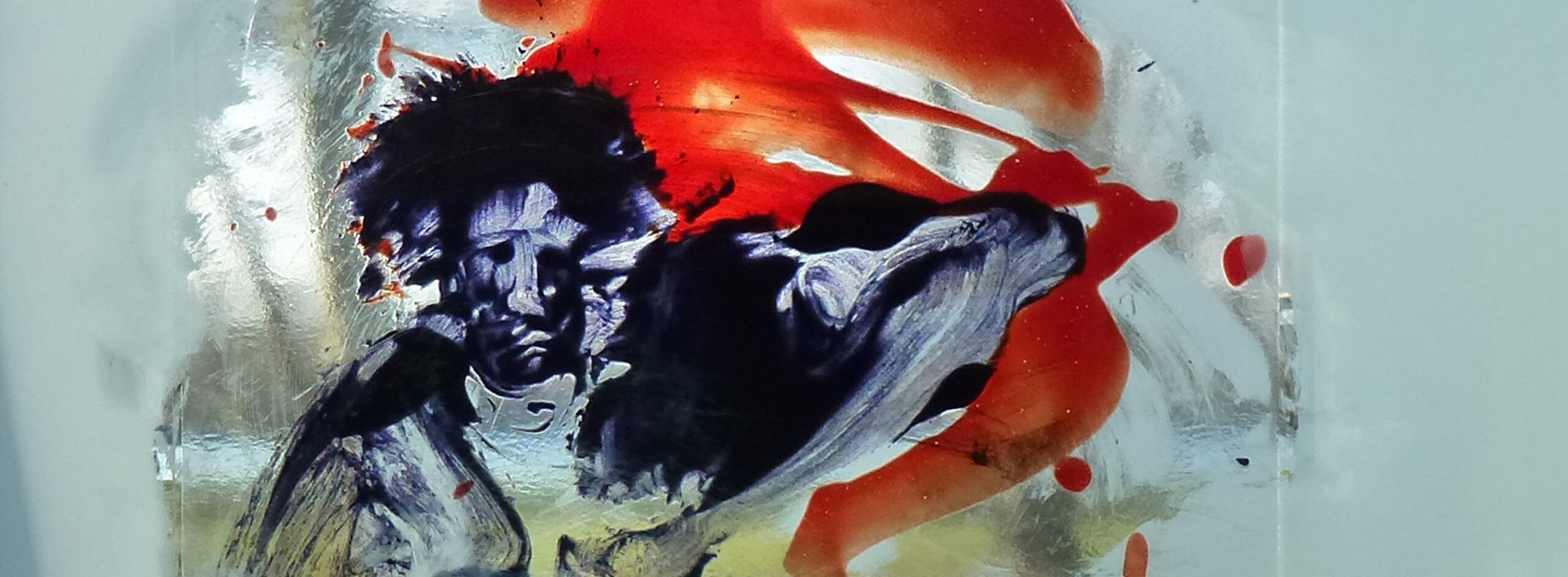
One day, the idea arose to chop glass into small pieces and then grind it so finely that it could be used as a painting medium. The glass could be spread out, layered, arranged spontaneously and then fired in a kiln. For part of the process, this solid material became something that could be handled almost like paint, only to be transformed back into glass by the firing process. Further experiments followed.
When photographic techniques opened up a freedom of expression in images that I had come to know in artists’ studios, I did not ask myself whether they were traditionally part of stained-glass art. My question was how glass could be altered in such a way that such artistic possibilities would also become conceivable with it.I developed processes that made it possible to render glass light-sensitive and thus capable of being exposed. I found a way to transfer colour photographs onto glass by sandblasting several layers of overlapping glass with pixel-precise accuracy.
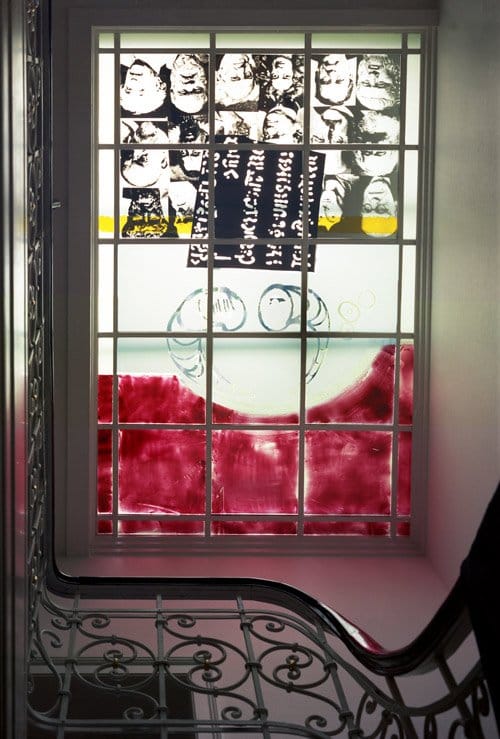
Photographically precise depth etchings in industrially manufactured laminated glass did not become my trademark simply because my responsibility towards my own health and that of my staff, as well as the consequences for our environment, prevented me from working for prolonged periods with the highly concentrated acids required.
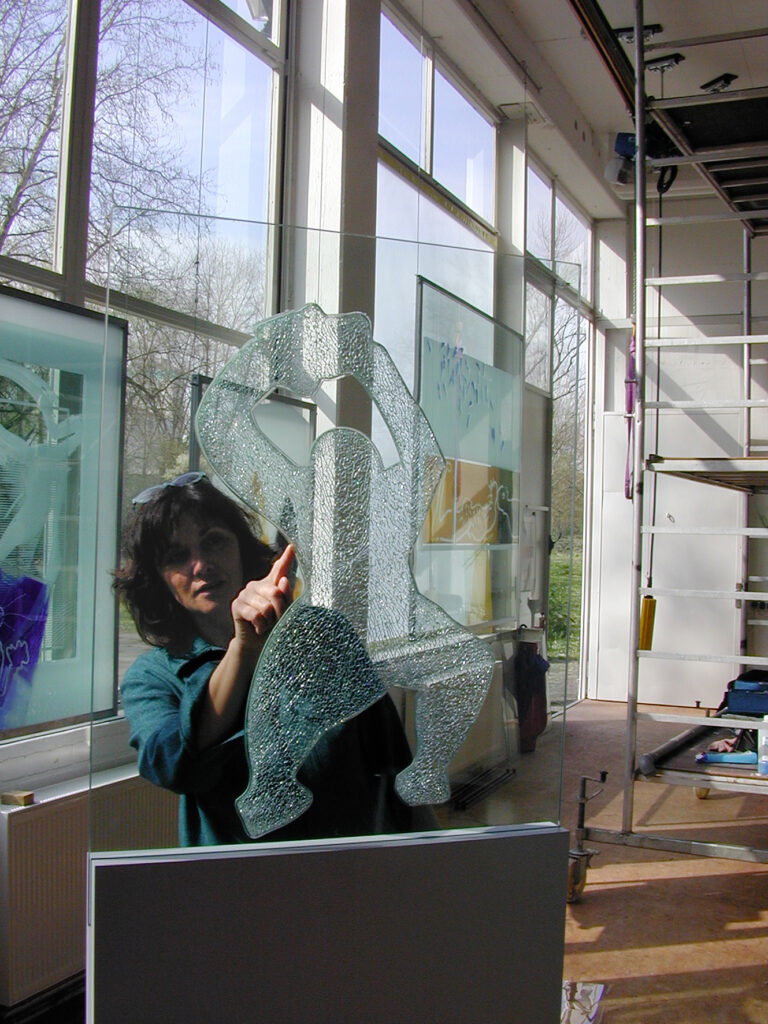
By laminating tempered glass, much like in marquetry, between two cover panes to form a laminated safety glass (LSG) composite, and then creating holes in the outer panes, I produced ‘splinter images’ that draw their life from the glittering effect of broken glass.
I developed some experiments further, discarded others, and some ultimately led to new and, in some cases, patented processes.
I would not want these developments to be misunderstood as a history of technical inventions. Technology was not my aim.
Technology stemmed from my need for freedom. That is a crucial difference.
It was not a new technique that suddenly gave rise to a new form of art. My artistic vision demanded possibilities that the existing technical vocabulary did not provide. So I had to expand that vocabulary.
When workshop and studio become one – artistic freedom
This also lends greater precision to the phrase ‘I paint with glass’, coined by John Thorn Prikker. For him, painting ‘with glass rather than on glass’ signified a fundamental return to the material’s intrinsic qualities. Coloured glass, lead came and light became, in themselves, means of composing the image.
For an artist who works directly with glass in their own studio, ‘with glass’ can mean something else entirely. It does not merely mean using the material; it means thinking with the material.
For centuries, glass has been a beautiful and enchanting material for stained-glass artists, yet at the same time an incredibly stubborn one. Many a complicated cut was ruled out, given the high risk of breakage. Countless blind lead lines, concealing cracks in the colourful artistic treasures of our church windows, bear witness to the desire to keep the leadwork within the image visually appealing to the viewer.
The desire for expressive lines, such as those found, for example, in the work of Johannes Schreiter, led him and the craftsmen working with him to resort to a technique that not all stained-glass artists would wholeheartedly approve of. Driven by the need to accurately reproduce the lines he had sketched by hand, acrylic glass is therefore used in one or two places.
In other cases, colours are sprayed, printed or applied using large and small brushes to achieve translucent effects similar in appearance to stained glass.
The idea, however, of painting not with any old paint but with glass itself is probably as old as stained glass itself. For anyone even remotely familiar with the material, however, this notion is unthinkable, as we know that glass is only liquid when processed at extremely high temperatures. However, as is well known, as soon as hot glass comes into contact with cool glass, the cooler glass cannot withstand this encounter.
In my quest to liberate the glass, I set out in search of a solution, and in the years leading up to the turn of the millennium, the idea took shape in my mind of grinding coloured glass as finely as possible, mixing it with a binder so that I could then apply it spontaneously using a paintbrush, cloth, brush or spatula, and finally fire it in a fusing kiln.
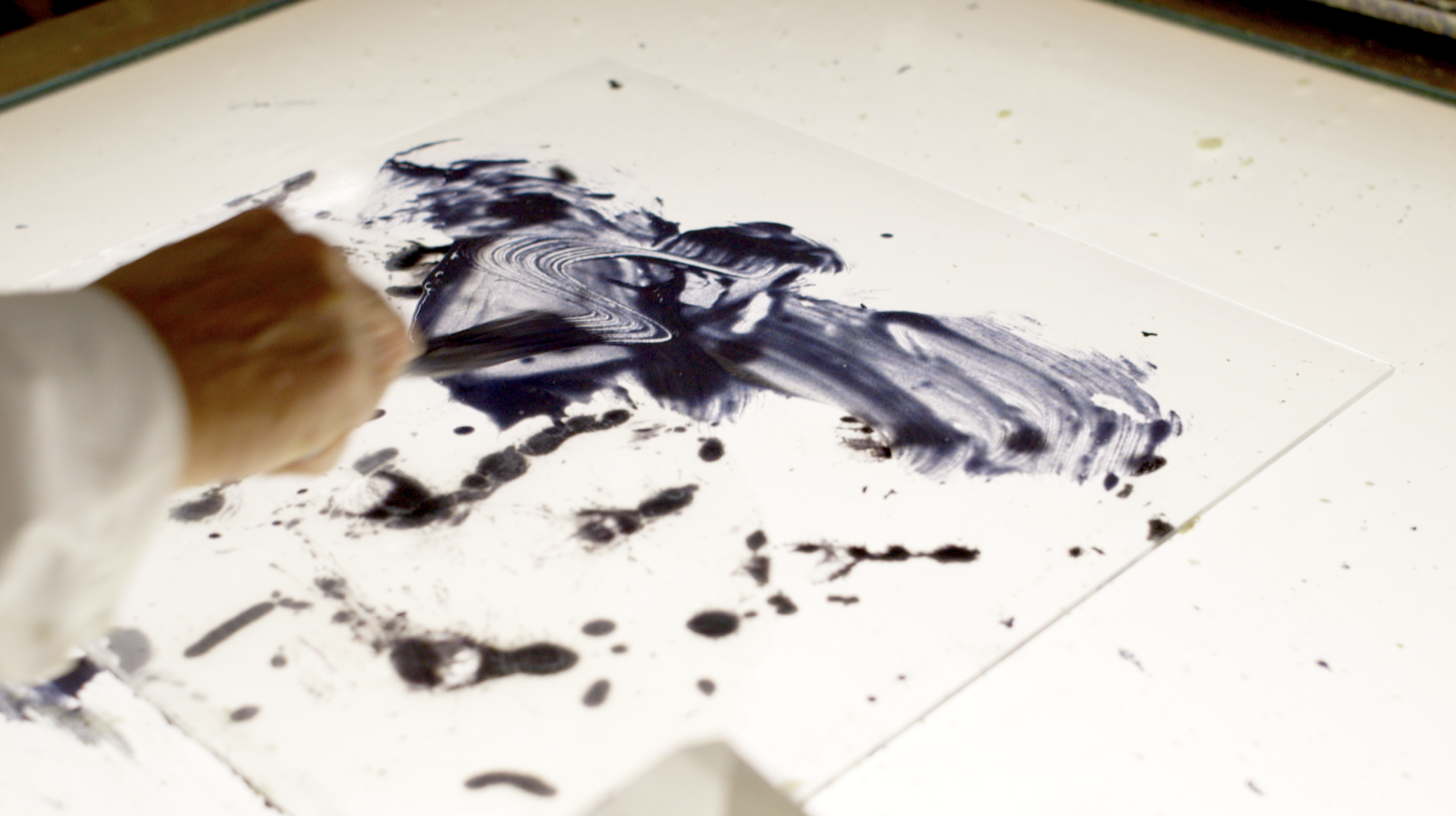
My first amateurish attempts to grind coloured pieces of glass into fine powder using old, hand-operated coffee grinders bought from second-hand shops encouraged me to pursue the idea further.
A learning process that has continued over many years, coupled with an unyielding determination to make this technique a success, means that today painting with coloured glass powder seems to me to be the most natural thing in the world:
Just as an expressive brushstroke survives the heat of the kiln, so too do the traces left by the palette knife when applying the glass powder. Yet the fired glass is only shaped by chance if I have consciously allowed this to happen – or even sought it out – during the painting process.
Nowadays, I source glass powder from the industry, which has been ground and cleared of any metal shavings from the grinding process.
A tried-and-tested technique, a wide range of standardised colours and a wealth of experience accumulated over the years allow me to work with glass today as freely as I once saw the artists I admired working on their canvases. The creative process in stained glass thus comes close to that of an artist working on a canvas in their studio.
However, this is only possible without restriction if the artist either possesses the necessary technical knowledge and facilities themselves, or if a workshop is prepared to go along with this open-ended process without the usual constraints of a pre-planned execution.
When the artist and the glass painter are one and the same person, the institutional boundaries of the glass workshop cease to apply. The design does not have to be finalised before the material comes into play.
The glass is allowed to contradict.
It is allowed to surprise.
It can force a new decision.
And the artist can respond to it.
Craftsmanship becomes part of the artistic thought and creative process.
Perhaps this is where the deeper significance lies of that development which, at first, could be described quite simply as the liberation of the glass artwork from architecture.
The first form of freedom was spatial: the artwork could leave its prescribed location.
The second was economic: it could be created without an architectural commission already legitimising its production.
The third was artistic: it no longer had to be fully conceived before its physical realisation began.
It is this third freedom, in particular, that not only changes the location of the stained-glass window; it changes the image itself.
The free image
This gives rise to a different type of work alongside the mobile or autonomous glass installation, which has been detached from its context as a window. An installation conceived from the outset without any specific architectural reference. It is not a window that has lost its building. Nor is it a curtain wall that has become mobile. It is a free-standing work of art.
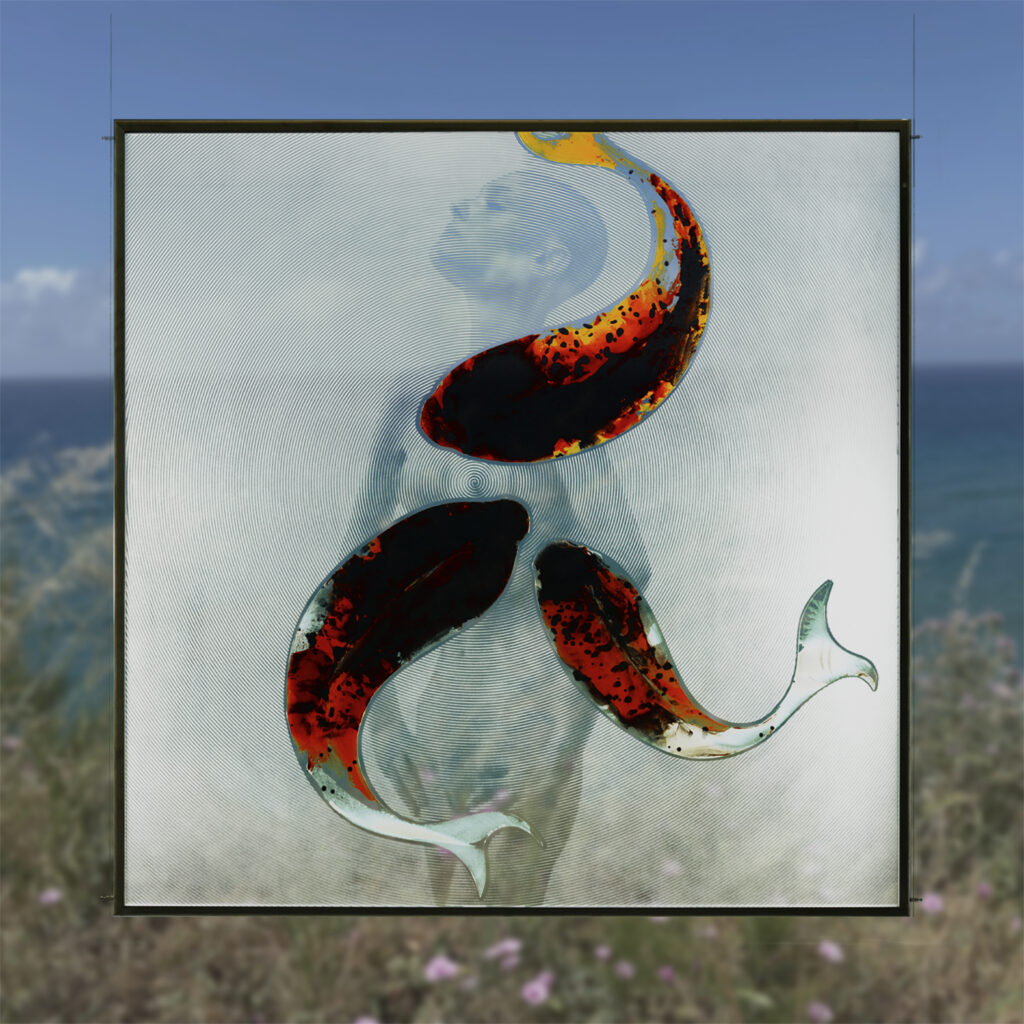
For decades, works of this kind have been created in my studio without there being, beforehand, a specific room, a specific wall or a specific window opening for them. Of course, they may later be placed within architectural contexts. They can be displayed in front of a wall, freestanding in a room, or in relation to existing architecture. But this architecture is not a prerequisite for them.
The free, transparent image is not, admittedly, independent of space. It does, however, emancipate itself from a prescribed space. Yet as soon as this image enters a space, its appearance can no longer be completely separated from it. It is precisely here that the extraordinary tension of the transparent image lies.
‘Free’ therefore does not mean devoid of relationships. It means the freedom to enter into relationships without being defined by them.
The limits of the classical image
This brings us to a question that extends far beyond the history of stained glass. What, in fact, is an image?
The classical panel painting has a boundary. Whether on a wooden panel or canvas – its pictorial space unfolds within this boundary; beyond it lies the viewer’s reality. The canvas may depict a landscape, but the actual wall behind it disappears. It may create the illusion of depth, yet this depth arises within a physically enclosed surface.
The transparent image behaves differently.
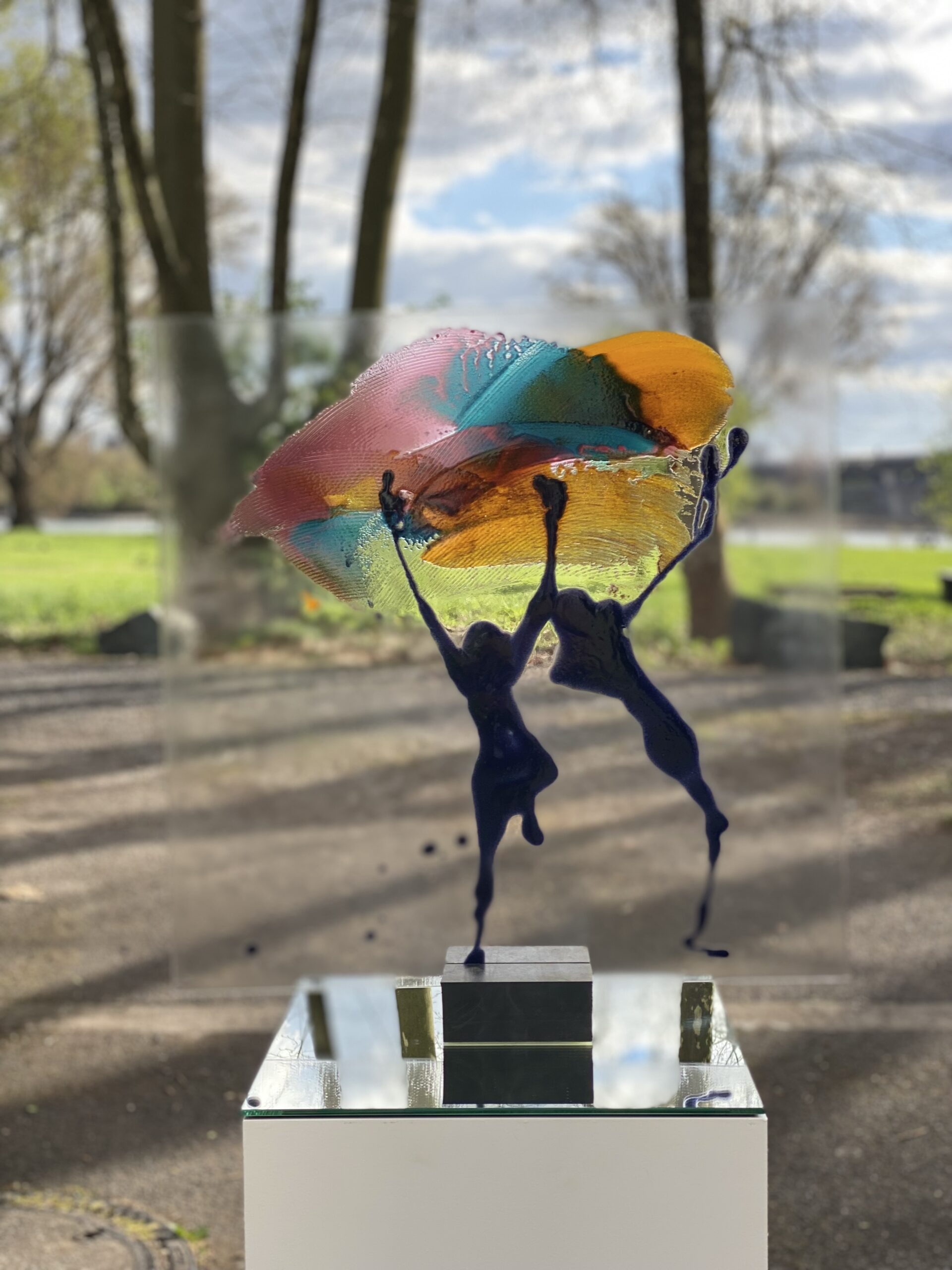
Although a pane of glass naturally has an edge and its physical dimensions can be clearly determined, it does not follow that this is where the image ends. For light passing through the surface can cast colour onto a wall or the floor. Its surface can reflect light, whilst at the same time we can see right through it. Different spatial planes can appear to meet within it, even though they are in fact far apart. The image takes in the world and gives something back to it.
Consequently, the notion of a ‘before’ and an ‘after’ is no longer sufficient. This presupposes a privileged viewer standing directly in front of the work. If they move, the arrangement changes.
The transparent image recognises not only foreground and background; it recognises the surroundings.
The picture in the room
Here, the transparent image approaches sculpture in a peculiar way. A sculpture occupies our real space. We can approach it, move away from it and walk round it. Our movement is part of how we perceive it.
The transparent image, too, exists within and alongside this real space. Yet it remains an image. It continues to work with surface, colour, line, composition and layering.
Its distinctive feature lies precisely in combining these two possibilities. Whilst the glass pane has a physical boundary, the pictorial boundary, by contrast, is fluid.
And at this point, even this formulation is no longer sufficient: the transparent image does not reveal the world behind it. For the world is not behind the image. It is all around it. The image is situated within a network of shifting relationships.
The work and its appearance
This also makes the question of completion more difficult.
At some point, the artist puts down their tools. A final decision has been made. Nothing is to be added and nothing removed.
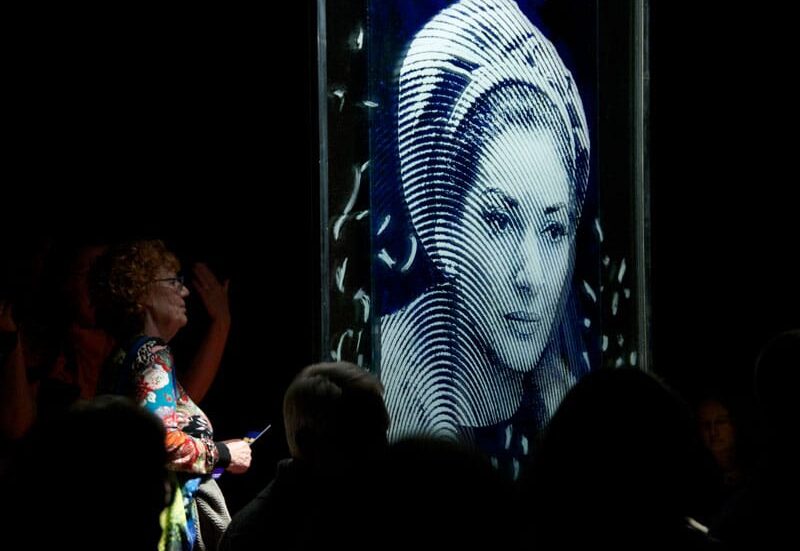
In this sense, it can be said: the work is complete, but its appearance is not.
Alongside this, however, there is another idea: a work is never complete.
Perhaps these two statements are less contradictory than they might initially seem.
The first sentence describes the moment when the artist’s work comes to an end.
The second describes the life of the artwork.
Incoming light, a new space, a passer-by, an open door or a reflection do not alter the physical artwork, but they do alter the context in which it becomes visible.
The transparent image does not, however, become arbitrary. The artistic framework remains intact, even if this framework does not produce a single definitive appearance.
The artist may bring his work to an end.
The work, however, does not bring its connections to an end.
Transparency is not the same as invisibility
The ideal window pane is one that virtually disappears from view. Its technical quality is evident precisely in the fact that we barely notice it and can see through it as unobstructed as possible.
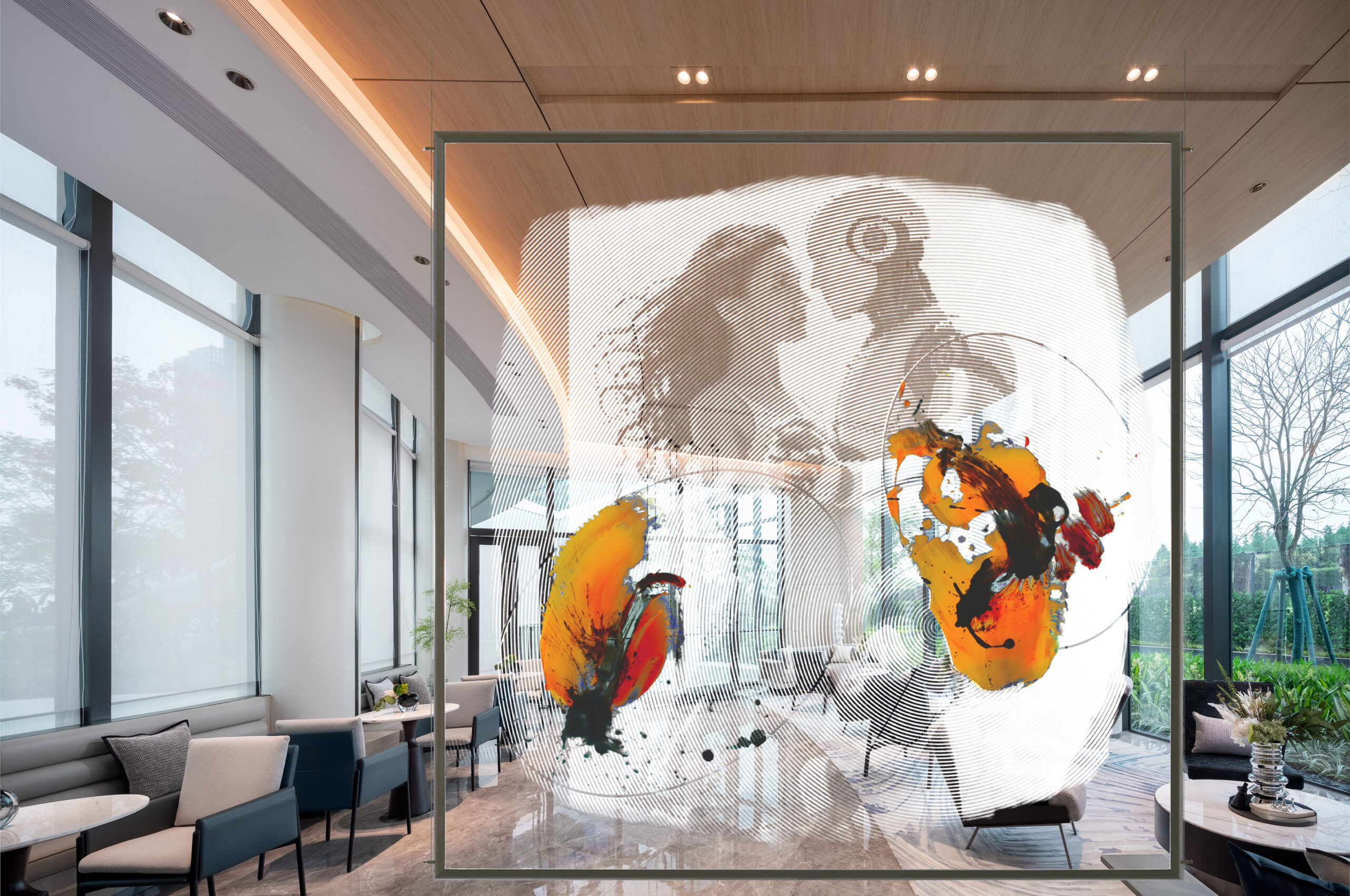
The transparent work of art, on the other hand, does not wish to disappear. It finds itself in a paradoxical state: it must be visible in its own right whilst at the same time allowing other things to be seen. It asserts its presence without completely supplanting the presence of the world.
Transparency must therefore not be confused with mere opacity.
It does not mean that there is nothing between us and reality. Quite the contrary: transparency means that what lies in between remains visible.
From a church window to a transparent image
This brings us full circle, without returning to the starting point.
Medieval church windows already possessed many of the qualities we recognise today in the transparent image: the way light alters them, their connection to the space, and the way they transcend the material boundaries of the image. Yet all of this was tied to a specific location, a specific function and a specific architectural context.
Modernism did not invent these characteristics. It gradually brought them to the fore. But this process was by no means linear. Architecture changed. Glass surfaces became larger. The divisions dictated by technical necessity were no longer taken for granted. Artists rediscovered the material’s unique qualities. Workshops developed techniques and brought designs to life. Experimental fields took on a life of their own. Stained-glass panels became mobile, and mobile glass images were able to become autonomous. And yet something was missing. For an image may leave its place yet remain unfree in the process of its creation.
Perhaps this is where the crucial correction to our previous conception of emancipation lies. The story does not merely lead from the church window to the autonomous glass image. It leads from the executed design to the freely emerging image.
Only when glass is no longer merely a material for a subsequent realisation, but is allowed to respond during the artistic process itself, does it become a medium for free image creation. Then a glass picture is no longer created simply because a window opening somewhere is waiting to be designed. It is created because an artist wants to make a picture. And glass is the language in which this picture can be conceived.
As a result, the term ‘glass art’ also loses some of its taken-for-granted status.
From glass art to art
A painter is not defined by the canvas. A sculptor is not defined by the stone. A composer is not defined by the instrument for which he writes.
There is always something at the outset that is meant to become visible, tangible or conceivable.
Why should an artist who works with glass be permanently defined by their material?
Perhaps, paradoxically, the ultimate consequence of the emancipation of glass would therefore be the overcoming of the category of ‘glass art’ itself.
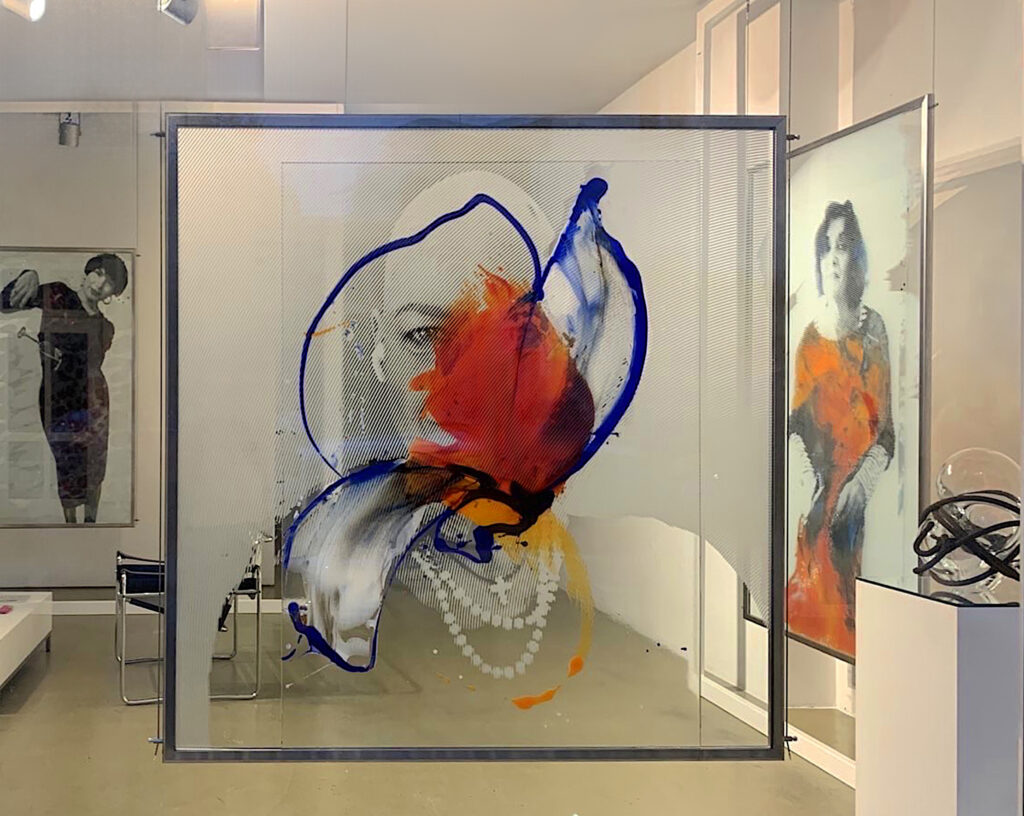
Exhibition at Galerie Leander Rubrecht, Wiesbaden
A fully emancipated material no longer needs to assert its place within art through its own genre designation.
Glass can be a visual medium just like colour, line, light or space.
The work is not significant simply because it is made of glass.
Glass is significant because, without its properties, this work could not be the same work.
Sources
* German Museum of Stained Glass – 20th-Century Stained Glass
